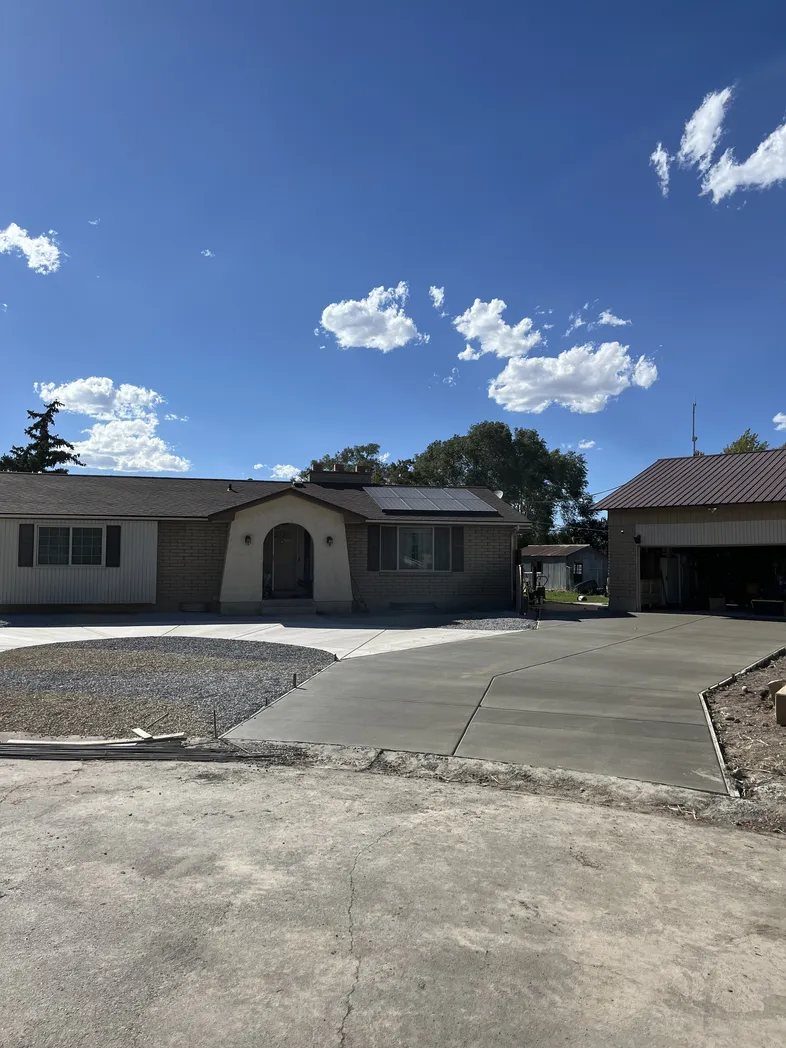
Comparing a paver driveway to concrete involves more than just aesthetics. In the Utah climate, pavers often provide superior longevity and repairability, while concrete remains a durable, cost-effective solution for many homeowners.
At Aloha Pavers & Concrete, we help homeowners think through driveway concrete and paver choices with real installation details in mind, not just surface appearance.
For homeowners in Utah County, Salt Lake County, and Wasatch County, freeze-thaw cycles and soil movement can make these details especially important.

Utah driveways must withstand high-altitude UV exposure, heavy snowmelt, and intense freeze-thaw cycles. The performance of your driveway depends on how well the chosen material handles soil expansion and drainage during the spring thaw.
This is especially true for a Utah freeze-thaw driveway environment. A well-built paver driveway and a well-built concrete driveway can both perform well. A poorly prepared base under either one can create problems much sooner than most homeowners expect.
That is why Aloha Pavers & Concrete focuses on practical planning details. Homeowners also appreciate being able to review samples and catalogs before the build starts, especially when curb appeal matters.
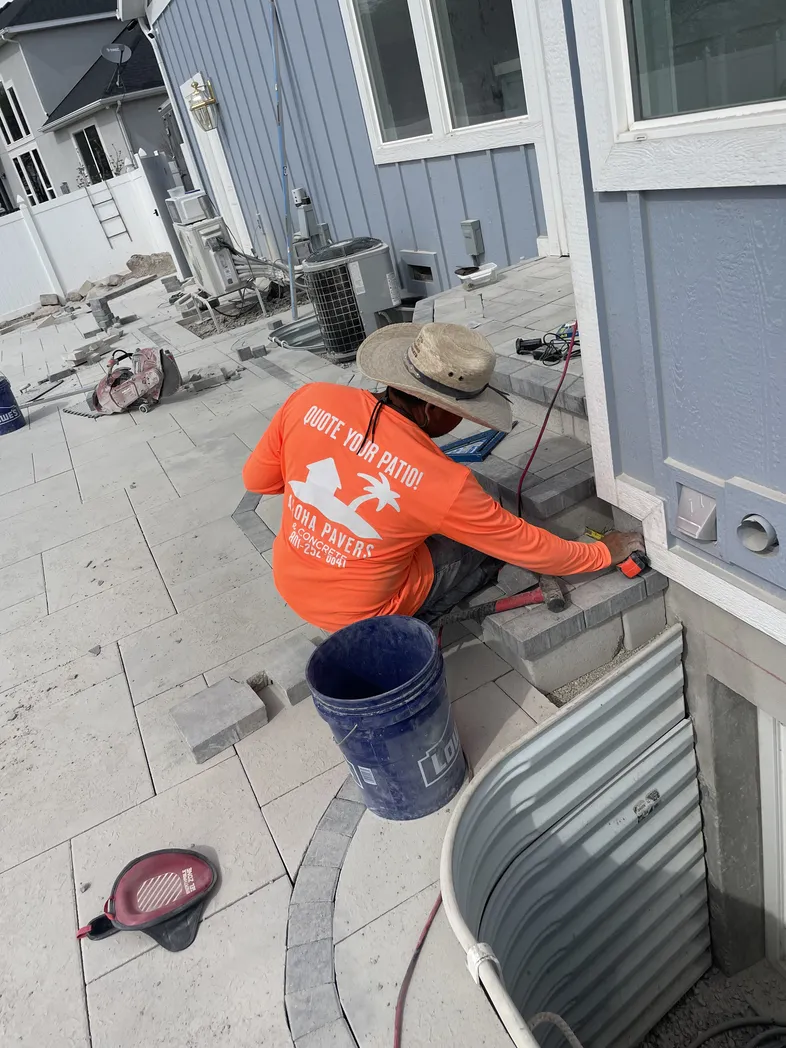
In many cases, pavers can have an advantage because the surface is made of individual units rather than one large slab. That can help the system accommodate small amounts of ground movement.
Concrete can last a long time too, but cracking is common over time and may become more noticeable in Utah conditions.
This is often where pavers stand out. If one area settles, stains, or gets damaged, that section can often be removed and reset without replacing the whole driveway. A major plus for future paver driveway repair.
Concrete driveway repair is possible too, but patches and crack repairs may still remain visible.
May need joint sand refreshed over time and occasional resetting in isolated areas.
May need sealing depending on finish and use, and cracks may need monitoring. In either case, drainage and routine care matter more than many people realize.
Offer more room for customization. You can choose shapes, color blends, borders, and patterns that fit the home.
Can also look attractive, especially with the right finish and layout. See these concrete finish options for outdoor surfaces.
Includes more piece-by-piece labor, plus edge details and joint sand. Usually costs more initially, but some prefer the long-term repair flexibility and upgraded appearance.
Can sometimes be simpler from a construction standpoint. Often has the lower upfront price. If comparing driveway concrete options, make sure you compare total lifecycle considerations too.
If you are still unsure, that is normal. A driveway choice usually comes down to five things: budget, aesthetics, maintenance, repairability, and timeline. An on-site consultation helps narrow it down quickly because slope, drainage, and existing conditions often influence the smartest choice.
Request a driveway consultationA lot of driveway performance starts below the surface.
For both paver installation and concrete installation, the sub-base matters. The area should be excavated to the right depth, then built back with properly compacted aggregate suited to the use of the driveway. A vehicle surface needs more support than a walkway.
Water is one of the biggest long-term concerns. If runoff is not directed correctly, both pavers and concrete can suffer. Proper slope and drainage planning can help reduce future issues, especially on a driveway installation in Utah where snowmelt and winter moisture can create repeat stress.
With pavers, joint sand helps lock the system together. With concrete, control joints and finishing help manage movement and cracking, though they do not prevent every crack. Good planning often makes a visible difference later.

If you are leaning toward a paver driveway, Aloha Pavers & Concrete installs trusted brands. Each line offers different styles, colors, and pattern options. The right fit depends on the look you want, the scale of the driveway, and your budget.
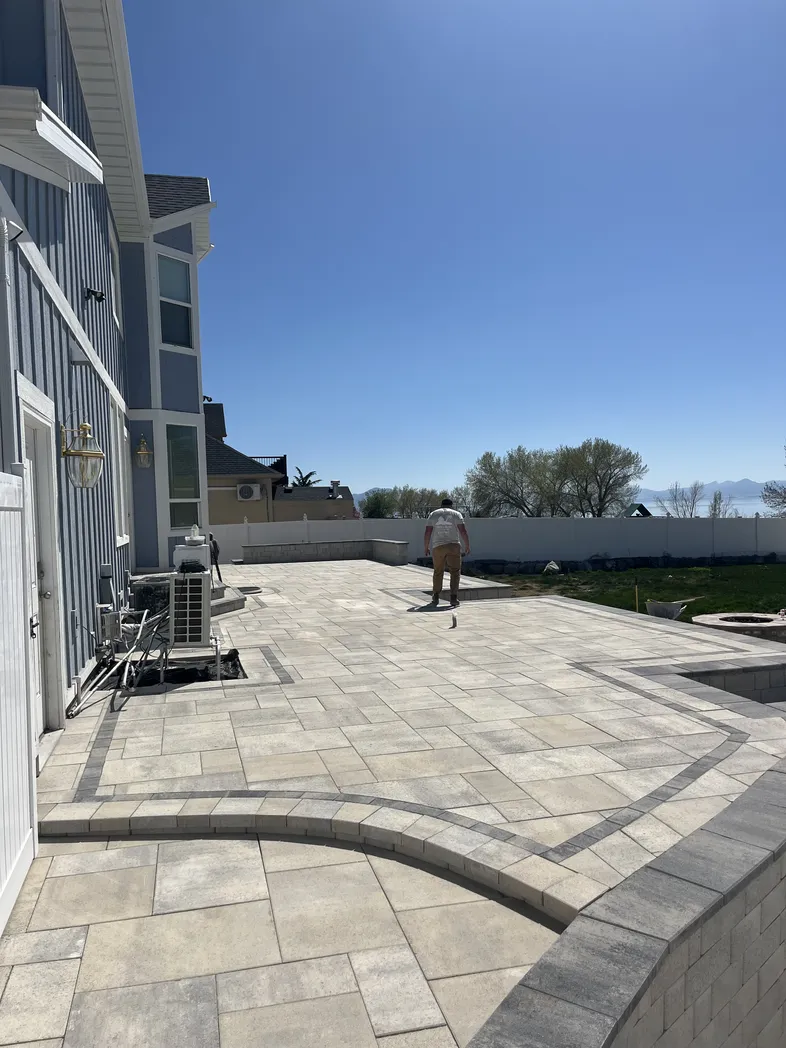
Each manufacturer offers unique textured finishes and load-bearing ratings. We provide a detailed breakdown to help you select a brand that matches your home's architectural style.
Compare paver brands like Belgard, Techo-Bloc, and UnilockIn many cases, they can, especially when the base is properly prepared and drainage is handled well. Pavers also have an advantage in repairability because individual sections can often be reset instead of replacing a large slab.
Often, yes on the front end. Concrete usually has a lower upfront cost, while pavers may cost more initially but offer more design flexibility and simpler spot repairs.
Pavers are often easier to repair because damaged or settled sections can be lifted and replaced locally. Concrete repairs can be effective, but patches and crack repairs may still show.
Not always by much, but the type of maintenance is different. Pavers may need joint sand maintenance and occasional resetting in isolated spots. Concrete may need crack monitoring, sealing in some cases, and surface care depending on the finish.
Ask about excavation depth, compacted base, drainage plan, edge restraint for pavers, concrete finish options, repair approach, and how the driveway design will fit the home. You can also ask to see samples or catalogs during the consultation.
Choosing between pavers and concrete is a long-term investment. Our team provides on-site assessments to evaluate your property's specific slope and drainage needs.
Utah homeowners trust Aloha Pavers & Concrete for our transparent scheduling and technical expertise. From excavation to final sealing, we ensure your new driveway is built to handle the Wasatch Front climate.